


As we head into the last quarter of 2026, we look forward to some of the top professional events taking place across Ireland over the next few months. From AI and cybersecurity to software development, construction, and business innovation, these conferences and summits bring together industry leaders, hiring companies, and ambitious professionals.
Whether you’re looking to stay ahead of market trends, grow your network, or explore new career opportunities, there’s something here for everyone. Have a browse and see what’s worth adding to your calendar.
*Dates and places may be subject to change; please click on the links for more information.

The Dublin AI Week | 2nd-9th October 2026 | Dublin
Date: 2nd to 9th October, 2026
Location: Various locations around Dublin
More Information: Dublin AI Week | Oct 2-9, 2026
Event Details: A week-long, community-led programme of 35+ AI events covering areas including AI infrastructure, security and compliance, AI in finance, enterprise AI and creative AI.
Who should attend: AI and software professionals, developers, data specialists, founders and business leaders looking to understand how AI is being developed and applied in Ireland.
Why go: A great opportunity to learn, connect with people building with AI, and explore a wide range of practical AI topics.
IOB Future of Finance Summit | 13th October 2026 | Dublin
Event Details: The Institute of Banking’s flagship event for financial services leaders, exploring the trends and developments shaping the future of finance.
Who should attend: Accounting and finance professionals, banking and financial services professionals, business leaders, and anyone interested in the changing financial landscape.
Why go: Hear from industry experts, gain fresh perspectives, and connect with peers across financial services.
International AI Summit | 14th October 2026 | Dublin
Event Details: A major international summit bringing together government and business leaders, investors, innovators, and academics to explore AI’s impact on competitiveness, infrastructure, investment, skills, and talent.
Who should attend: AI and IT professionals, software developers, technology and business leaders, investors, and anyone interested in the future of AI.
Why go: One of the biggest AI events in Ireland this year, offering insight into where AI technology, investment, and policy are heading.
CIF Digital Construction Summit | 15th October 2026 | Dublin
Date: 15th October, 2026
Location: Croke Park, Dublin
More Information: 2026 Agenda – CIF DIGITAL CONSTRUCTION SUMMIT
Event Details: Focused on the digital transformation of construction, including AI, digital processes, BIM, productivity, and the technology being used on major infrastructure projects.
Who should attend: Construction and engineering professionals, project managers, contractors, infrastructure professionals, and those working in digital construction.
Why go: A strong opportunity to understand how technology is changing the way Ireland’s construction and infrastructure projects are delivered.
Convergence – Digital Infrastructure Ireland Conference | 22nd October 2026 | Dublin
Date: 22nd October, 2026
Location: Croke Park, Dublin
More Information: Convergence 2026 | Digital Infrastructure Ireland
Event Details: A senior-level conference looking at the infrastructure, investment, energy, skills, AI, and cybersecurity needed to support Ireland’s digital economy.
Who should attend: IT and technology professionals, infrastructure and engineering professionals, business leaders, investors, and those working in digital infrastructure.
Why go: Gain a clearer picture of Ireland’s digital infrastructure roadmap and hear directly from the people shaping investment and development in the sector.
IRISSCON 2026 | 11th November 2026 | Dublin
Event Details: Ireland’s annual cybersecurity conference, focusing on the current cyber threats facing businesses and how organisations can respond.
Who should attend: Cybersecurity and IT professionals, security specialists, risk professionals and business leaders.
Why go: Stay up to date with the evolving threat landscape, hear from industry experts and connect with professionals working across cybersecurity in Ireland.
Lean Construction Ireland National Conference | 4th November | Meath
Date: 4th November, 2026
Location: Johnstown Estate, Co Meath
More Information: LciConference – LciConference
Event Details: A major construction event focused on optimising business performance through Lean practices, innovation, and digital transformation. It brings together more than 300 professionals from across the construction industry.
Who should attend: Construction and engineering professionals, contractors, project managers, clients, and anyone interested in improving productivity and project performance.
Why go: A practical opportunity to learn from industry case studies, explore new approaches, and connect with construction professionals across Ireland
DevFest Ireland 2026 | 28th November, 2026 | Dublin
Date: 28th November, 2026
Location: National College of Ireland, Dublin
More Information: DevFest Ireland 2026
Event Details: Ireland’s largest community-led developer festival, with a full day of talks, workshops and hands-on learning across web, cloud, AI and mobile.
Who should attend: Software developers, IT professionals, cloud specialists, AI practitioners, students and anyone looking to develop their technical skills.
Why go: A particularly good event for keeping technical skills current, learning from experienced developers and connecting with Ireland’s wider developer community.
This is part of our 2026 contracting series, with insights, interviews, and tips for businesses and contractors alike. In this article, we focus on why contractors can be a smart investment for organisations.
Contractors are playing a bigger role than ever in helping businesses deliver projects quickly and efficiently.
The True Cost of Hiring: Why Contractors Often Make More Sense Than You Think
When it comes to hiring, it’s easy to focus on the obvious: salaries, job specs, and start dates. But the real cost of a full-time hire often goes much deeper – especially when you factor in onboarding time, overheads, and long-term commitments. That’s where contracting can be a game-changer.
More organisations in Ireland are turning to contractors to deliver specialist projects quickly and efficiently. As companies continue to invest in digital transformation, infrastructure, and business change initiatives, access to experienced professionals on a flexible basis has become increasingly valuable. This trend is reflected in the continued growth of what’s often called the “Project Economy” – highly skilled professionals working on defined projects rather than traditional permanent roles.
According to the latest Ireland’s Project Economy Report from Trinity Business School and Contracting PLUS, the average contractor daily rate across sectors was €552 in 2025, slightly down from €571 in 2024 following a period of rapid growth. Even with this adjustment, average annual earnings for project-based contractors remained strong at €117,978, underlining the ongoing demand for specialist expertise.
In fast-moving sectors like tech and IT, bringing in contractors isn’t just about cost – it’s about flexibility, speed, and getting the right skills exactly when you need them. And when you partner with the right agency, the process becomes even easier.
At E-Frontiers, we’ve spent the last 20 years helping companies build high-performing contract teams. We know what works, and more importantly, how to make it work for you.
Full-Time Hires Come with Hidden Costs
It’s not just the salary—there’s also employer taxes, pensions, insurance, equipment, training, holiday pay, and more. In the UK, National Insurance adds 15% on top of a salary. In Ireland, Emploer PRSI is 11.25% (for weekly earnings above €552). Add benefits and onboarding time, and the true cost can be significantly higher than expected.

Why Contractors Make Financial Sense
Here’s what you get with a contractor:
Minimal overheads – They handle their own tax, insurance, pensions, etc.
Work done = money spent – You pay only for productive time signed off by you.
Faster, leaner hiring – Most contract placements occur within days, not weeks. We recently placed a contractor within 24 hours for a tech client.
And when you partner with us, you’re not starting from scratch every time – we already know your business, your hiring style, and your ideal candidate. That means faster turnarounds, stronger matches, and less admin for you.
💡 Example: One of our clients recently saved over 30% by hiring two contractors for a 6-month data transformation project rather than onboarding two permanent team members. The result? A completed project ahead of schedule, and no long-term overheads
Contractors Give You Room to Move
Contractors Give You Room to Move
Contractors give organisations rapid access to specialist skills – from cloud engineers and AI specialists to regulatory experts — often unavailable within permanent teams. Whether it’s launching a new product, filling a temporary gap, or responding to a sudden shift in business needs, contractors allow companies to scale their teams quickly and keep projects moving.
In today’s fast-paced business environment, the ability to bring in the right expertise at the right time can significantly reduce delivery timelines while avoiding the long-term costs associated with permanent hires.
Simply put, contractors help businesses achieve results faster – without the stress of a lengthy recruitment process.
Test the Fit, Reduce the Risk
Every hire carries some level of uncertainty. Contractors allow you to trial skillsets and cultural fit before making longer-term decisions. Think of it as a risk-free way to get the best talent on board – quickly and confidently.
What the Market’s Telling Us
Here’s a look at what’s happening out there:
Rising daily rates – As mentioned, the average daily rate for project-based contractors in Ireland was €552 in 2025. However, highly specialised ICT contractors still command much higher rates, averaging around €632 per day in 2025. https://www.tcd.ie/business/research/irelands-project-economy/
Shift in hiring trends – 45% of tech roles in 2024 were contract or project-based (up from 30% the year before). This is most certainly grown throughout 2025, the IT Search 2025 market report noted that one of the strongest trends in 2025 was an increase in contract opportunities and that the “contractor-first” approach was expected to continue into 2026.
The project economy continues to grow – High-skilled project-based contractors now significantly outnumber gig-economy workers in Ireland, by roughly 7 to 1, highlighting the continued demand for specialist expertise on defined projects.
More women than ever are choosing Contracting, with female contractors earning a higher average daily rate €565 than their male counterparts, €548
Contracting is retaining older, more experienced, and high-value individuals in the workforce for longer, allowing people to remain active in the workforce beyond traditional employment norms.
Contracting helps keep skilled talent in Ireland, boosts productivity, and adds economic value. It also offers a flexible and inclusive way for people to work, making it easier for those with caregiving responsibilities, limited part-time options, or other barriers to traditional employment to contribute.
Remote talent is the norm – Companies are tapping into skilled contractors globally.
Contracting motivations vary – Millennials and Gen Z are drawn to flexibility and higher pay, Boomers and Gen X value autonomy and impact.
Specialist skills are in demand – From cloud engineers to data architects, contractors are often the fastest way to access niche expertise.
Addressing Common Concerns
“Will they feel part of the team?”
Absolutely. With the right onboarding, contractors can integrate seamlessly. Involving them in team meetings, day-to-day comms, and planning sessions from day one helps build connection and encourages collaboration just like any permanent team member.
“What about confidentiality and data security?”
Standard contractor agreements cover all the legal bases – IP, confidentiality, GDPR.
“Are they as committed as full-time staff?”
In our experience, most contractors are career professionals. They rely on repeat business and referrals, so they’re deeply motivated to deliver quality work and results.
Why Partner with E-Frontiers?
Here’s the real value: when you work with us long term, we become an extension of your hiring team. We already understand your processes, your team structure, and your preferences. That means:
Faster turnarounds on every role
Tailored shortlists – no time wasted
Market insights and contractor availability at your fingertips
Support with onboarding, contracts, and renewals – fully managed
We’re not just filling roles – we’re helping you build a flexible, scalable workforce that grows with your business.
Looking Ahead
Looking ahead to the last quarter of the year, contracting is expected to remain a key part of how organisations build agile teams. Businesses are increasingly delivering work through defined projects – whether that’s digital transformation, AI implementation, cybersecurity upgrades, or infrastructure modernisation. In these environments, contractors provide immediate access to highly specialised skills without the long-term commitment of permanent hires. As companies continue to balance cost management with the need for innovation and speed, we expect demand for experienced contractors across IT, data, and engineering to remain strong throughout the reminder of 2026.
Final Thoughts
In today’s tech-driven world, hiring contractors isn’t just a cost-saving strategy – it’s a smart way to stay nimble, competitive, and ahead of the curve. The right contractors, brought in at the right time, can transform the pace and quality of your delivery.
If you’re looking to explore contracting – or want a partner who can take the stress out of it – get in touch with us at E-Frontiers. We’re here to make it simple, seamless, and successful.
Contact Conor Hackett, Head of Contracting UKI, to discuss how we can help.
Trabajando cada día con empresas tecnológicas y candidatos, hay algo que vemos constantemente: el salario sigue siendo importante, pero ya no es lo único que determina si una persona acepta o rechaza una oferta.
Muchos profesionales tech reciben varias oportunidades al mismo tiempo. Y cuando eso ocurre, la decisión final suele depender de otros factores mucho más relacionados con la experiencia laboral.
La flexibilidad, la calidad del liderazgo, las posibilidades de crecimiento o el equilibrio personal pesan cada vez más.
De hecho, algunas empresas siguen perdiendo talento incluso ofreciendo salarios competitivos, simplemente porque su propuesta no conecta con lo que el mercado espera hoy.
Estas son algunas de las cosas que más valoran actualmente los perfiles tecnológicos y que más aparecen en nuestras conversaciones con candidatos.

Flexibilidad real
La flexibilidad sigue siendo el tema que más aparece en prácticamente cualquier proceso. Y no hablamos solo de teletrabajo. Los candidatos valoran especialmente poder organizar su tiempo con autonomía, trabajar en entornos donde exista confianza y evitar culturas demasiado rígidas o presenciales.
Muchas empresas siguen utilizando discursos de flexibilidad bastante superficiales, pero los profesionales detectan rápidamente cuándo esa flexibilidad es real y cuándo no. Hoy, para muchos perfiles tech, volver a modelos excesivamente tradicionales simplemente no es una opción.
Salario competitivo y transparencia
El salario sigue siendo importante, obviamente. Pero algo que ha cambiado mucho es la necesidad de transparencia.
Cada vez más candidatos esperan conocer las bandas salariales desde el inicio del proceso. Cuando una empresa evita hablar de compensación hasta fases muy avanzadas, suele generar bastante fricción. También se valora que existan criterios claros de crecimiento y revisiones salariales coherentes.
Crecimiento profesional
Los candidatos valoran muchísimo trabajar en entornos donde puedan seguir aprendiendo, participar en proyectos interesantes y evolucionar técnicamente.
No se trata solo de ofrecer cursos. También importa tener buenos referentes técnicos, proyectos sólidos y espacio para crecer dentro de la organización.
Buen liderazgo y cultura
Esto tiene muchísimo más impacto del que muchas empresas creen. En recruitment escuchamos constantemente historias de personas que dejan trabajos bien pagados por mala gestión, exceso de burocracia o culturas agotadoras.
Los perfiles tecnológicos suelen valorar entornos organizados, managers accesibles, comunicación clara y equipos donde puedan trabajar con autonomía. Cuando la cultura interna funciona, se nota muchísimo también en la capacidad de retención.
Bienestar y equilibrio personal
Después de años bastante intensos para el sector, muchos profesionales priorizan mucho más el equilibrio personal. Las empresas que realmente respetan horarios, evitan dinámicas constantes de urgencia y promueven entornos sostenibles suelen resultar mucho más atractivas. Aquí entran beneficios como seguro médico, flexibilidad horaria o días adicionales de descanso, pero sobre todo importa la cultura real detrás de esas políticas.
Proyectos interesantes
Algo que muchas veces se subestima es el peso que tiene el propio proyecto. Muchos candidatos quieren trabajar con tecnologías modernas, equipos sólidos y productos donde realmente puedan aportar valor. Especialmente en perfiles senior, el tipo de reto técnico puede influir muchísimo en la decisión final.
Una buena experiencia de trabajo
Puede parecer un detalle pequeño, pero no lo es. Trabajar con herramientas lentas, procesos caóticos o tecnología desactualizada genera muchísima frustración.
Las empresas que cuidan la experiencia diaria del equipo: desde el hardware hasta los procesos internos, suelen generar una percepción mucho más positiva entre los profesionales tech.
Lo que muchas empresas todavía no terminan de ver
Uno de los errores más comunes es pensar que todos los candidatos valoran exactamente lo mismo. Y es que, no existe un único beneficio universal. Nos encontramos con candidatos que priorizan flexibilidad, otras crecimiento, la estabilidad o conciliación.
Por eso las propuestas rígidas funcionan cada vez peor. Lo que sí vemos de forma bastante consistente es que las empresas más atractivas suelen tener algo en común: escuchan al mercado y entienden bien a las personas que quieren contratar.
Qué deberían hacer las empresas en 2026
Desde nuestra experiencia trabajando con empresas del sector tech, sacamos una idea bastante clara: competir únicamente con salario ya no funciona.
Las empresas que mejor están contratando suelen tener propuestas mucho más completas. No necesariamente perfectas, pero sí coherentes. Flexibilidad real, liderazgo sólido, crecimiento profesional y una cultura sana pesan muchísimo más de lo que muchas organizaciones imaginan. Y en un mercado donde el talento tiene capacidad de elegir, esos factores marcan una diferencia enorme.
Diversity, Equity, and Inclusion (DEI) is no longer a “nice to have” in the workplace – it’s expected. But while many companies talk about DEI, not all deliver on it in a meaningful way.
For job seekers today, the challenge isn’t just finding employers who mention DEI – it’s identifying those who genuinely embed it into their culture, leadership, and day-to-day working environment.
This focus on workplace inclusion is becoming increasingly important across Ireland. In recent years, gender pay gap reporting requirements have expanded significantly, with organisations employing more than 50 people now required to publish annual reports. This increased transparency is giving candidates greater insight into how organisations approach equality, representation, and progression in the workplace.How to report on the Gender Pay Gap
If you’re considering a career move in the second half of 2026, here’s how to look beyond the surface and assess what DEI really looks like in practice.

Why DEI Still Matters – But Looks Different Today
In recent years, the conversation around DEI has matured. It has moved beyond policies and statements and into something far more tangible: the employee experience.
Across Europe, there is a growing focus on how employees experience the workplace, rather than what company policies say on paper. The Financial Times’ 2026 Diversity Leaders ranking, for example, placed significant emphasis on employee feedback when assessing organisations’ diversity and inclusion performance, highlighting the importance of creating genuinely inclusive working environments. FT-Statista 2026 Diversity Leaders ranking and methodology
Today, strong DEI in the workplace shows up as:
– Inclusive leadership and decision-making
– Equal access to opportunities and progression
– Flexibility that supports different lifestyles and responsibilities
– A culture where people feel heard, respected, and safe to contribute
Candidates are increasingly prioritising these factors – not just for ethical reasons, but because they directly impact job satisfaction, performance, and long-term career growth.
What to Look for Before You Apply
Before submitting an application, take a few minutes to assess how an organisation presents itself.
Here are some key indicators:
1. Careers Page & Messaging: Is the language authentic, or does it feel generic? Look for specific examples rather than broad statements.
2. Representation Across the Business: Check leadership teams and company profiles. Is there visible diversity, particularly at senior levels? While progress is being made in Ireland, women still represent less than one-third of senior executive positions across Irish organisations, making leadership representation an important indicator of how inclusion translates into career progression opportunities. Key Findings Gender Balance in Business Survey 2025 – Central Statistics Office
3. Employee Voices: Are there real stories or testimonials from employees? These often give a more honest view than corporate messaging.
4. Evidence of Flexibility: Do they clearly outline hybrid working, flexible hours, or inclusive policies- or is it vague?
Questions You Should Ask Employers
Remember, interviews are a two-way process. Here are a few simple but effective questions to help you assess DEI in an interview:
– “How do you ensure different perspectives are included in decision-making?”
– “What does career progression look like across the team?”
– “How do you support flexible working in practice?”
– “Can you share examples of how employee feedback has shaped the workplace?”
The answers – and how confidently they’re delivered – can be very revealing.
How to Spot DEI in the Hiring Process
The hiring process itself can reveal a great deal about a company’s culture.
Pay attention to:
– Interview structure – Is the process clear and consistent?
– Panel diversity – Are you meeting a range of people?
– Communication style – Do you feel respected and included throughout?
– Accessibility – Are accommodations offered or welcomed?
A company that values inclusion will reflect this in how they engage with candidates – not just what they say.
Red Flags to Watch Out For
Not every organisation gets it right. Some warning signs include:
– Vague or overly polished answers with no real examples
– A lack of diversity at senior level
– Inconsistent hiring experiences
– Little evidence beyond statements or policies
If something feels unclear, it’s worth digging deeper.
Final Thoughts
Looking ahead, workplace transparency is set to become an even bigger factor in the job search process. Alongside Ireland’s gender pay gap reporting requirements, the EU Pay Transparency Directive will introduce new obligations around pay transparency and reporting.
While primarily focused on closing pay gaps, the legislation reflects a broader shift towards fairness, accountability and openness in the workplace. For candidates, this means greater visibility into how organisations approach pay, progression, and equality. How to report on the Gender Pay Gap
DEI is no longer just a company initiative – it’s a key factor in choosing where to build your career.
As a candidate, you have more insight and influence than ever before. By asking the right questions and paying attention to the details, you can make informed decisions and find an environment where you’ll truly thrive.
Because ultimately, the right role isn’t just about what you do – it’s about where you feel you belong.
At E-Frontiers, we’re here to help you find more than just a job — we’re here to help you find the right fit. If you need support or guidance at any stage of your job search, just get in touch.
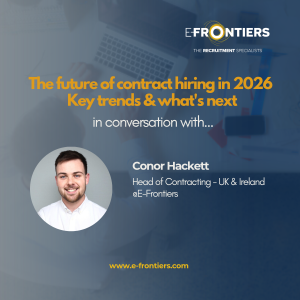
As organisations continue to navigate economic uncertainty, rapid digital transformation, and evolving workforce expectations, contracting has become a strategic cornerstone of modern hiring. What was once a tactical stopgap is now a key lever for agility, speed, and delivery. To gain further insight into these evolving trends, we caught up with Conor Hackett, Head of Contracting at E-Frontiers, to hear his thoughts on where the contracting market is heading in 2026
The Shift to Speed: Contracting as a Delivery Engine
A defining trend across 2025 and into 2026 is the increasing importance of speed-to-hire and speed-to-impact. Businesses are prioritising how quickly talent can drive outcomes rather than simply focusing on cost efficiency.
In practice, this means organisations are using contractors to rapidly mobilise teams, accelerate delivery timelines, and avoid costly project delays. Contracting is no longer just about plugging gaps; it’s about enabling immediate productivity and maintaining momentum in critical programmes.
Key takeaway: Contracting is evolving into a core mechanism for delivering projects at pace.
The Project Economy Is Now Mainstream
Workforce strategy is increasingly centred around projects rather than permanent roles. Organisations are structuring teams around defined outcomes, digital transformation initiatives, cloud migrations, AI deployment, and large-scale infrastructure programmes.
This shift reinforces the value of highly skilled contractors who can deliver against specific objectives without long-term commitments.
Key areas seeing sustained demand include:
– Technology and software engineering
– Data and AI transformation
– Cybersecurity and cloud infrastructure
What this means: Contractors are becoming the backbone of execution in a project-driven economy.
Specialisation & Talent Scarcity
Demand for niche, high-value skillsets continue to grow. From cloud engineers and DevOps specialists to AI and data experts, organisations are increasingly competing for a limited pool of highly skilled contractors.
Traditional hiring channels often struggle to meet these needs due to:
– Lengthy hiring timelines
– Limited access to passive talent
– Rapidly evolving technical requirements
As a result, pre-qualified contractor networks and specialist recruitment partners are becoming critical to securing the right expertise quickly.
Insight: Access to specialised talent, not just availability, is now the key differentiator in hiring success.
Remote & Distributed Contracting as Standard
Remote work has firmly embedded itself within the contracting model. Organisations are increasingly hiring talent across geographies to access scarce skills and maintain flexibility.
This shift has led to:
– Broader talent pools alongside increased competition for top contractors
– Greater reliance on structured onboarding and compliance frameworks
– A need for seamless collaboration across distributed teams
Trend evolution: Remote contracting is no longer optional; it is the default operating model.
Cost Pressures vs Capability Needs
Despite continued cost sensitivity across many sectors, contracting remains attractive because it aligns closely with both financial discipline and delivery needs.
Businesses benefit from:
– No long-term overheads such as pensions, benefits, or employer taxes
– A pay-for-output model where spend ties directly to delivery
– Reduced hidden costs associated with onboarding and long-term employment
Even where contractor rates fluctuate, the flexibility and productivity gains often outweigh the perceived higher day-rate cost.
Insight: Contracting enables organisations to balance cost control with access to high-impact talent.
Workforce Demographics Are Changing
The contractor workforce is becoming more diverse, experienced, and strategically valuable.
Key shifts include:
– Increased participation across different demographics and experience levels
– Greater representation of professionals choosing contracting for flexibility and autonomy
– A growing number of experienced specialists remaining in the workforce longer through contracting
Insight: Contracting is evolving into a sustainable and attractive career path, strengthening the overall talent market.

Emerging Trends Shaping the Rest of 2026
Looking ahead, several trends are set to define the contracting landscape for the remainder of the year:
- Squad-Based Hiring Will Accelerate
Organisations are increasingly moving beyond hiring individuals to deploying fully formed contractor teams or “squads.”
This model:
– Reduces ramp-up time
– Improves team cohesion from day one
– Aligns with agile and product-led delivery
Expectation: Squad-based hiring will become a standard approach for major transformation programmes.
-
AI, Data & Cybersecurity Will Drive Demand
Investment in emerging technologies continues to surge, particularly in:
– Artificial intelligence implementation
– Data architecture and analytics
– Cybersecurity resilience
These areas require highly specialised expertise that is often best accessed through contracting.
Expectation: The demand for top-tier technical contractors will remain strong, with premium skill sets continuing to command high value.
-
Partner-Led Hiring Models Will Grow
Recruitment partners are playing a more strategic role than ever before. Beyond sourcing talent, they are increasingly involved in:
– Workforce planning
– Talent pipelining
– Compliance and onboarding management
Organisations are relying on partners to act as extensions of their internal hiring functions.
-
Time-to-Hire Will Become a Competitive Advantage
Speed is becoming a key differentiator. Organisations that can secure and onboard talent quickly are outperforming those with slower processes.
Implication: Businesses with lengthy hiring cycles risk losing top contractor talent to faster-moving competitors.
-
Hybrid Workforce Models Will Dominate
The future workforce is not a choice between permanent employees and contractors; it is a blend of both.
Organisations are:
– Maintaining core permanent teams for stability
– Adding contractors for flexibility and specialist delivery
– Scaling teams dynamically based on project requirements
Final Outlook
Contracting has firmly established itself as a strategic hiring solution in a fast-changing business environment. Its ability to provide speed, flexibility, and access to niche expertise makes it indispensable for organisations focused on delivery and transformation.
For the remainder of 2026, successful organisations will be those that:
– Embrace project-based workforce planning
– Build strong contractor ecosystems
– Move quickly and decisively in competitive talent markets
In an era defined by change, contracting offers a powerful advantage: the ability to deliver outcomes with both agility and precision.
At E-Frontiers, we work closely with organisations to help them navigate this evolving landscape – connecting businesses with high-quality contract talent quickly, efficiently, and in line with their project goals. Whether you are scaling teams, delivering transformation programmes, or accessing niche expertise, our specialist teams are here to help you get it right.
For further information to help you on your Contracting career journey, please contact:
Conor Hackett – Head of Contracting – E-Frontiers.
La diversidad en el entorno laboral se ha consolidado como un elemento clave para las organizaciones que buscan innovar y adaptarse a un entorno en constante cambio. Más allá de una cuestión ética, construir equipos diversos se ha convertido en una ventaja competitiva real.
Aun así, llevar la diversidad a la práctica diaria sigue siendo un reto. Desde los sesgos inconscientes hasta la falta de medición o el papel del liderazgo, las empresas se enfrentan a desafíos que requieren un enfoque más estructural y sostenido.
Para profundizar en este tema, hablamos con Pedro Corchado, especialista en comunicación corporativa y contenidos digitales. Hoy nos comparte su experiencia y visión sobre los retos, las oportunidades y las claves para impulsar culturas verdaderamente inclusivas.
Desde tu experiencia, tanto como empleado como miembro del grupo de diversidad en tu actual trabajo, ¿cuáles son hoy los principales retos que enfrentan las empresas para construir entornos de trabajo verdaderamente diversos e inclusivos?
Creo que el principal reto es pasar del discurso a la realidad. Muchas empresas ya entienden que la diversidad y la inclusión son importantes, pero no siempre consiguen traducirlas en decisiones, procesos y acciones concretos.
También sigue siendo clave entender que la inclusión no se construye solo con políticas, sino con cultura. Puedes tener protocolos o campañas, pero si las personas no sienten que pueden ser ellas mismas y desarrollarse sin sesgos, todo se queda en el papel.
Y, por último, diría que hacen falta más escucha y más hecho: escuchar mejor a los equipos y hacer que la diversidad forme parte real del día a día, no solo de momentos puntuales.
¿Qué iniciativas o prácticas has visto que realmente marquen la diferencia en la inclusión diaria dentro de las organizaciones?
Las que hacen que la inclusión sea real en el día a día, no solo una política. Por ejemplo, revisar el lenguaje, cuidar los procesos de selección, dar visibilidad a referentes diversos o asegurar que distintas voces participan en la toma de decisiones.
También funcionan muy bien los espacios de escucha, los grupos internos de diversidad y las acciones que ayudan a que las personas se sientan parte de la organización sin tener que encajar a la fuerza.
Al final, lo que marca la diferencia no suele ser una gran campaña, sino una suma de decisiones.
Cuentanos, desde tu experiencia en el grupo de diversidad de tu actual empresa, ¿cómo se puede medir de forma efectiva el impacto de las políticas de diversidad e inclusión?
Creo que hay que combinar datos y experiencia. Por un lado, medir cuestiones como representación, promoción, rotación o participación en iniciativas. Y por otro, escuchar cómo se sienten realmente las personas dentro de la organización.
Encuestas, entrevistas, focus groups o canales de escucha ayudan a entender si la gente percibe igualdad de trato, seguridad y pertenencia.
Y también hay señales muy valiosas en la participación: si aumentan las propuestas, los espacios compartidos, las actividades o el número de personas que se sienten lo suficientemente seguras como para implicarse, exponerse y formar parte activa de estas iniciativas.
Para mí, una buena medición no consiste solo en contar cuántas acciones se han hecho, sino en comprobar si esas acciones están cambiando percepciones, comportamientos y oportunidades reales dentro de la organización.

Pedro Corchado, Senior Communications Specialist & Media Content Coordinator en Cuatrecasas. Cuenta con una larga trayectoria en el de la comunicación corporativa y actualmente forma parte del grupo de afinidad de Diversidad de su actual empresa.

¿Qué papel juegan los líderes y RRHH en impulsar una cultura inclusiva y cómo pueden las empresas acompañarlos en este proceso?
Tienen un papel fundamental. Los líderes marcan el paso a través de sus decisiones, su forma de comunicar y el entorno que generan en sus equipos. Si no están comprometidos, cualquier iniciativa pierde fuerza.
RRHH, además, tiene una función estratégica: revisar procesos, detectar sesgos, impulsar políticas y acompañar a las personas durante todo su recorrido en la empresa.
Pero para que ambos puedan hacerlo bien, la organización tiene que darles formación, herramientas y espacios para aprender y resolver dudas.
Desde tu punto de vista, ¿cuáles son los errores más habituales que cometen las organizaciones al abordar la diversidad, y cómo pueden evitarlos?
Uno de los errores más habituales es tratar la diversidad como una acción puntual o como una cuestión de imagen. Otro, comunicar mucho hacia fuera y transformar poco hacia dentro.
También pasa a menudo que se apuesta por la diversidad, pero no por la inclusión: se incorporan perfiles diversos, pero no siempre se garantiza que puedan crecer, participar y sentirse parte del entorno.
Para evitarlo, hacen falta escucha, coherencia y compromiso a largo plazo.
Con una mirada orientada a la comunicación, branding y marca empleadora, ¿cuáles son los beneficios de tener una cultura que cuida la diversidad y la inclusión?
El principal beneficio es la credibilidad. Hoy no solo importa lo que una empresa dice, sino cómo actúa y cómo cuida a las personas que forman parte de ella.
Una cultura inclusiva fortalece la marca empleadora, mejora la atracción y fidelización del talento y refuerza el orgullo de pertenencia. Además, hace que la comunicación sea más consciente, más representativa y más conectada con la realidad.
En ese sentido, la diversidad y la inclusión no son solo una cuestión cultural, también son un activo de marca.
Para aquellas empresas que están empezando su camino en diversidad e inclusión, ¿qué pasos prácticos recomendarías para avanzar de forma auténtica y sostenible?
Lo primero es entender cuál es su punto de partida: escuchar a las personas, identificar barreras y detectar prioridades reales.A partir de ahí, conviene definir una hoja de ruta realista, implicar al liderazgo y revisar procesos clave como selección, promoción, formación o comunicación interna. Y, sobre todo, asumir que esto no va de hacerlo perfecto desde el principio, sino de avanzar con compromiso, coherencia y continuidad.
Si buscas apoyo en la búsqueda y selección de perfiles tech y de ventas, contáctanos. Podemos ayudarte a diseñar procesos que impulsen la incorporación de talento diverso en tu organización.
Contracting continues to appeal to tech professionals looking for flexibility, strong earning potential, and exposure to exciting projects – but it also comes with its own challenges and trade-offs.
To give candidates an honest perspective on what contracting is really like, we spoke with an experienced Software Development Engineer currently working as a contractor in Ireland. From uncertainty and contract renewals to flexibility, independence, and career growth, this Q&A provides practical insights for anyone considering a move into contracting.
From Permanent Employee to Contractor
What was your career like before contracting, and what made you consider this route?
I was working as a full-time Software Engineer before getting into contracting. What attracted me initially was the flexibility, especially around money management, which has been a big plus for me personally.
Deciding to Take the Leap
What made you decide that contracting was the right path for you?
To be honest, it took me about a year of working as a contractor before I decided I wanted to continue long term.
There is some uncertainty involved in contracting, but there are also plenty of opportunities. One downside is that, as a contractor, you sometimes can’t represent the company at conferences or industry events. I missed out on a few opportunities at major conferences, but overall, I was comfortable with that trade-off.
The Early Experience
What was it really like when you first started contracting?
I was anxious at the start, but the team I worked with never made me feel like an external contractor. I always felt like any other employee and a part of the company.
I was given good opportunities by my leaders and felt very comfortable in the environment.
The Challenges Nobody Talks About
What challenges did you face, and how did you navigate them?
I had no idea about becoming a director or setting up a limited company before starting contracting, so that was a completely new space for me and something I had to learn quickly.
Another challenge was the uncertainty around contract renewals every six months. Sometimes renewals were smooth and sometimes stressful.
Anca and the team at E-Frontiers were so helpful to me throughout the process and supported me through those situations.

Advice for Anyone Considering Contracting
What advice would you give to someone thinking about moving into contracting?
Learn about becoming a director or setting up a limited company early, as it can really help you in the long run.
You also need to think carefully about the realities of contracting – not getting paid for holidays, time off, or public holidays is a big adjustment for some people.
At the same time, contracting offers flexibility, independence, and a level of freedom that can be very rewarding.
Looking Back
How has contracting shaped your career and would you make the same choice again?
I was fortunate enough to get a call from E-Frontiers even when I wasn’t actively looking for a change. I took a leap of faith, and it worked out well for me.
I’m extremely grateful for the opportunity. Working independently has allowed me to contribute more to projects while also giving me greater freedom in my work.
I would absolutely make the same choice again.
The Best Part of Contracting
What’s your favourite part about being a contractor?
One thing that stood out to me throughout my experience is that I never really felt like “just a contractor.”
I still felt involved in company activities, team events, and the wider culture.
Personally, my favourite part of contracting has been the flexibility and the ability to manage my own finances more independently.
Final Thoughts
Contracting isn’t for everyone. It comes with uncertainty, responsibility, and the need to adapt quickly – but for many experienced tech professionals, it can also offer flexibility, autonomy, and strong career opportunities.
The key is understanding both the advantages and the realities before making the move.
If you’re considering a move into IT contracting and want to understand the current market, day rates, or opportunities available, the team at E-Frontiers is always happy to have a confidential conversation.
Contact Anca Antonica or Trish Lynch with any queries.
Email anca.antonica@e-frontiers.ie | trish.lynch@e-frontiers.ie
As Ireland’s contracting market continues to mature, 2026 is shaping up to be a year defined by opportunity, flexibility, and strategic career choices. No longer seen as a short-term solution, contracting is now a deliberate path for professionals across IT, finance, engineering, and beyond.
To explore what’s really happening on the ground, E-Frontiers spoke with Gerard Kiernan, Managing Director of ICON Accounting, a firm specialising in providing accounting and payroll solutions for Limited Company Contractors in Ireland.
Drawing on his experience supporting contractors across multiple sectors, Gerard shares practical insights on market trends, common pitfalls, and how professionals can build a sustainable and rewarding contracting career.
Gerard, from your vantage point supporting contractors across IT, Tech, Finance, and beyond, how would you describe the Irish contracting market as we head into 2026?
From our perspective at Icon, the contracting market is not just holding up, it is evolving.
While IT remains a core pillar, we are seeing real expansion across Pharma, Engineering, Finance, Medical, Insurance and Marketing. Businesses are no longer relying on contractors as a stopgap, they are building them into their workforce strategy and projects.
There are challenges, but the overall picture is strong. Demand for high quality talent remains high, and contracting continues to be a key solution for companies that need flexibility and expertise.
Contracting is increasingly being viewed as a long-term career choice rather than a short-term solution. What are the key benefits you see for professionals choosing this path today?
Control is the big shift.
Professionals want control over their income, their time, and the work they take on. Contracting delivers all three.
We are also seeing a clear move from umbrella structures to Personal Limited Companies. That step gives contractors far greater flexibility around tax planning, financial management, and long-term wealth building.
On top of that, contractors can choose the projects they work on, the clients they engage with, and how they structure their work-life balance. For many, it is no longer an alternative career path, it is the preferred one.
For professionals considering contracting for the first time, what are the best practices ICON strongly recommends before making the move?
Do your homework properly.
Start by speaking to a specialist contract recruiter to understand demand, day rates and where your skills fit in the market. Then speak to a contractor focused accountant to get a clear financial comparison.
Contracting can significantly increase your income, but you need to understand the full picture. You are stepping away from PAYE, which means managing your own pension, holidays, sick pay and protection.
At Icon Accounting, we walk clients through that entire comparison not just the upside, but how to structure things properly so they are protected and set up for the long term.
What are the most common mistakes or ‘don’ts’ you see new contractors make — and how can they avoid them?
The biggest mistake is guessing.
Too many people rely on second-hand advice instead of speaking to professionals. Contracting is too important a move to figure out as you go.
Cash flow is another trap. Payment cycles are different, and if you are not prepared, it can catch you off guard in the early months.
We also see contractors misunderstanding company finances, particularly those operating through a limited company. Not everything that lands in your account is yours, there are tax obligations and business costs to manage.
Another major issue is protection. Too many contractors do not put income protection in place early, which creates unnecessary risk.

How important is it for contractors to have the right professional support around them – accounting, recruitment, legal – and what impact does this have on long-term success?
It is the difference between surviving and thriving.
The right recruiter does not just place you once, they help you build continuity between contracts. That consistency is what turns contracting into a sustainable career.
At the same time, your accounting and legal setup needs to be right from day one. Choosing between an umbrella structure and a Personal Limited Company is not just admin, it directly impacts your income, compliance, and long-term strategy.
Get that foundation right early and everything else becomes easier.
For professionals working with recruiters like E-Frontiers and accounting partners like Icon Accounting, what advice would you give on building a sustainable and rewarding contracting career in Ireland?
Treat your career like a business because that is exactly what it is.
Invest in your skills. The contractors who consistently upskill are the ones who command the highest rates and those costs are often tax efficient.
Build your network. Your next contract often comes from relationships, not job boards.
Finally, surround yourself with the right partners. A strong recruiter and a specialist accounting firm do not just support you, they accelerate your career.
At Icon, we also focus heavily on the Contractor community. Contracting can be independent, but it does not have to be isolating. The more connected you are, the stronger your career becomes.
In summary, the message is clear: contracting in Ireland is not just growing, it’s evolving into a long-term, strategic career choice. For professionals willing to approach it with the right mindset, preparation and support, the rewards can be significant.
As Gerard highlights, success in contracting comes down to treating your career like a business, staying informed, and surrounding yourself with the right experts. With the right foundations in place, contractors are well positioned to not only navigate the market in 2026, but to thrive in it.
For further information to help you on your Contracting career journey, please contact:
Gerard Kiernan – MD – Icon Accounting
Conor Hackett – Head of Contracting – E-Frontiers.

El modelo freelance ha dejado de ser una alternativa puntual para convertirse en una pieza cada vez más relevante dentro de las estrategias de talento en el sector tecnológico. En un contexto marcado por la necesidad de agilidad, especialización y adaptación constante, las empresas empiezan a mirar más allá de la contratación tradicional para dar respuesta a sus retos de negocio.
Sin embargo, el crecimiento de este modelo en España no está exento de complejidad. Factores como la regulación, la competencia internacional por el talento y la falta de madurez del mercado plantean desafíos que obligan a las organizaciones a repensar sus procesos internos y su forma de colaborar con estos perfiles.
Para entender mejor cómo encaja el talento freelance dentro de las empresas tech y qué oportunidades y retos presenta, hablamos con, Octavio de Elía, Head of Contractor Supply y con una gran trayectoria en el ámbito de la adquisición de talento en entornos tech. Nos comparte, en enta entrevista, su visión sobre la evolución del mercado, las ventajas de este modelo y las claves para integrarlo de forma estratégica y eficiente.
¿Cómo ves en estos momentos el papel del freelance en España? ¿Crees que está cambiando la tendencia y cada vez más empresas apuestan por este modelo de colaboración?
El mercado de freelance en España es complejo. Por un lado podemos observar un claro interés de las empresas, especialmente en el sector de tecnología, hacia modelos de trabajos flexibles. Este modelo se presenta como muy atractivo a la hora de pensar en suplir necesidades a corto plazo y reducir el riesgo laboral. Muchas empresas están dispuestas a pagar un precio más alto por este modelo, para garantizar mayor estabilidad en la planificación de su plantilla a largo plazo. Sin embargo el mercado es altamente complejo y regulado a la hora de optar por este tipo de modelo, lo que conlleva mucho trabajo interno de cumplimiento normativo y gestión de riesgos.
Por otro lado, España se ha convertido en un Hub de tecnología muy importante y atractivo para la región. Especialmente ubicaciones como Barcelona, Madrid y Málaga cuentan con mucho talento local y expatriado que trabajan remoto para múltiples países de la Unión Europea e incluso Estados Unidos. Esto genera que el talento freelance local acceda a oportunidades internacionales con remuneraciones que dificultan la competencia para empresas nacionales. Por lo que se puede decir que el mercado freelance en España, no solo es un mercado en desarrollo, sino que es altamente competitivo.
Desde tu posición como Head of Talent Acquisition, ¿qué retos a nivel empresa os llevan a apostar por perfiles freelance en vuestros equipos tech?
Hay dos beneficios claros. El primero es la velocidad en la que estos perfiles pueden comenzar a trabajar en los proyectos. La contratación a tiempo completo requiere no sólo procesos de selección más largos y exhaustivos, sino que también obliga a lidiar con períodos de aviso previo. Estos, dependiendo de la especificidad del rol, pueden ir de 15 días a 3 meses. El talento freelance, al trabajar por proyectos, suele poder ingresar de manera inmediata, algo que muchas veces es necesario. Adicionalmente, al tener una naturaleza mucho más transaccional que los empleados, contamos con un proceso de selección reducido, que ayuda con la velocidad de contratación.
El segundo beneficio es la naturaleza temporal de este tipo de relación laboral. Muchas veces nos encontramos con el desafío de encontrar personas con habilidades técnicas que no forman parte de las necesidades a largo plazo de la empresa. Al trabajar por proyectos, este talento permite hacer una inversión a corto plazo para suplir necesidades específicas.
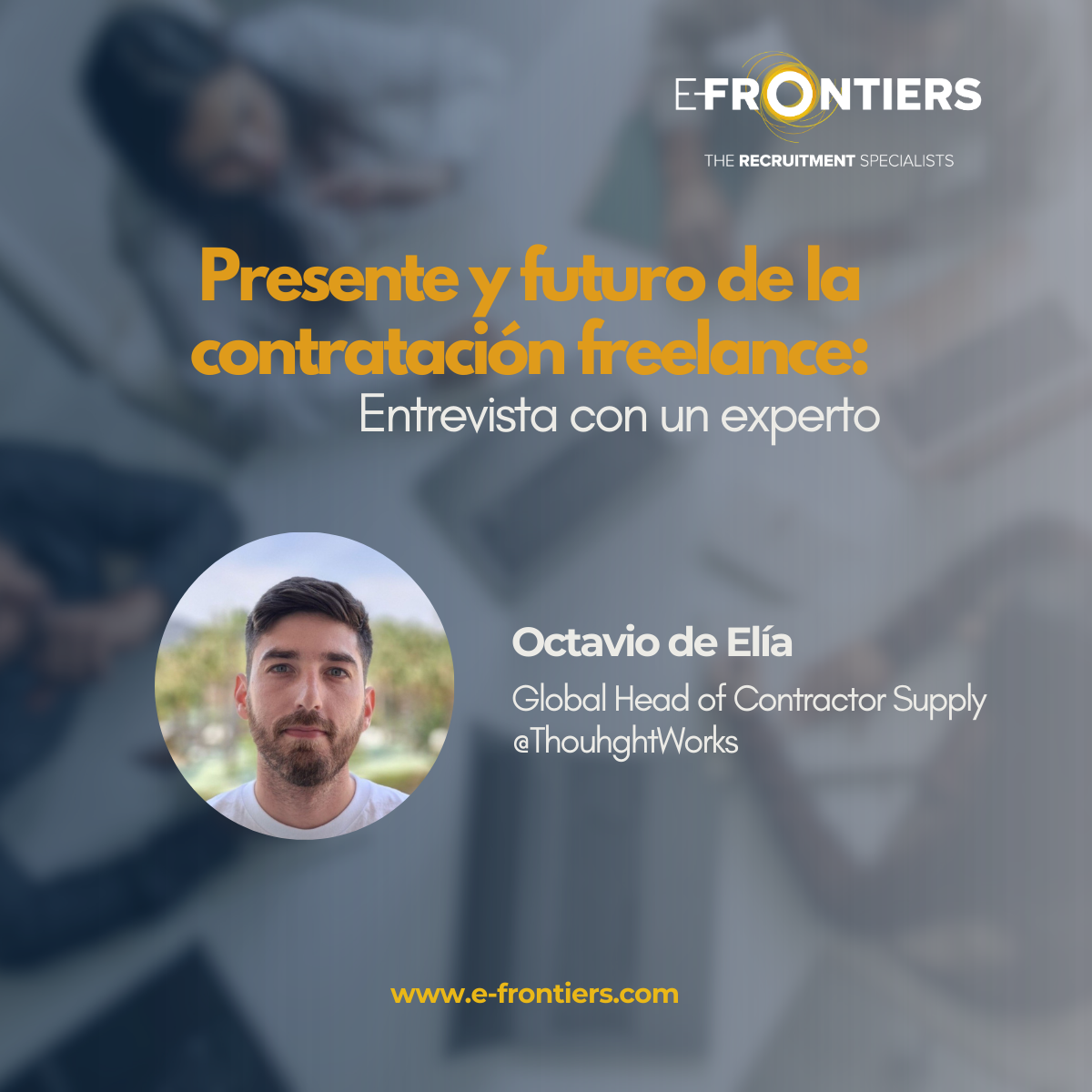
Octavo de Elía, Head of Contractor Supply en Thoughtworks. Cuenta con una larga trayectoria en el ámbito de la adquisición de talento en entornos tech.

¿Es fácil encontrar perfiles bajo esta modalidad o aún hay poco conocimiento sobre los beneficios de ser freelancer ?
No diría que es fácil, aunque con la ayuda de los partners adecuados es muy factible. El mercado español no es de los más desarrollados en Europa para esta modalidad por lo que cuesta encontrar perfiles adecuados. En mi opinión, todavía hace falta más desarrollo y madurez en el mercado para que sea una opción viable a gran escala.
¿Cómo encaja el modelo freelance dentro de vuestra estrategia global de talento? ¿Cómo son los onboardings de este tipo de perfiles?
A nivel de estrategia de talento, el modelo freelance es sin duda una apuesta muy interesante. Creo que una empresa de servicios profesionales se puede ver muy beneficiada por este esquema y suple necesidades muy concretas y estratégicas.
A nivel de costos, da una flexibilidad muy valiosa que permite planificar el trabajo y el crecimiento de manera estratégica.
El proceso de incorporación (Onboarding) para estos colaboradores se simplifica considerablemente. Dado que no son empleados directos, es posible limitarlo a la información esencial para sus proyectos y los sistemas de trabajo esenciales. Esta optimización maximiza el tiempo productivo en proyectos, haciendo que el modelo sea significativamente más rentable.
Desde tu punto de vista, ¿qué ventajas os aporta trabajar con freelancers frente a la contratación indefinida tradicional?
Como he mencionado antes, los beneficios principales son la naturaleza temporal de estos trabajadores y la velocidad en la que pueden ingresar al negocio. Especialmente, trabajar con freelancers permite reaccionar a las necesidades de los clientes de una manera mucho más rápida que con modelos de contratación tradicionales.
Otra variable interesante, es que el mercado de talento freelance cuenta con muchos trabajadores especializados, con quienes trabajar por proyectos por un tiempo determinado es la estrategia más eficiente. Esto se debe tanto a la naturaleza de su trabajo como a que las compañías pueden no requerir estas funciones de forma permanente.
Para cerrar, ¿qué consejo darías a otras empresas tecnológicas que están valorando incorporar freelancers?
Un consejo claro es que preparen sus equipos internos para dar soporte a este tipo de reclutamiento y relación laboral. Las diferencias entre trabajar con freelancers y empleados es considerable y no debe ser tomada a la ligera. La educación hacia los equipos internos en cómo tratar y colaborar con los freelancer es altamente necesaria para garantizar el cumplimiento normativo y para lograr colaboraciones exitosas. Es igual de importante educar a los equipos de negocio para entender las ventajas y beneficios que este tipo de trabajadores trae. Los procesos internos, particularmente de selección, onboarding y ciclo de vida han de ser adaptados para aprovechar todas las ventajas que el modelo de trabajo flexible trae.
Otro aprendizaje que puedo compartir, es que es importante saber identificar cuándo es beneficioso y cuándo no. Muchas veces los equipos internos no entienden todas las diferencias entre un freelancer y un empleado. Por lo tanto, los equipos de Talento debemos hacer un buen trabajo de ser socios estratégicos del negocio y aconsejarlos adecuadamente.
Si buscas apoyo en la búsqueda y selección de perfiles tech y de ventas, contáctanos y veamos cómo podemos acompañarte a crear un entorno donde las personas quieran quedarse y crecer.
En el sector tecnológico hablamos mucho de diversidad. Pero cuando bajamos al proceso de selección… muchas veces seguimos haciendo lo mismo de siempre.
Hablar de diversidad no significa “cumplir una cuota”. Se trata de diseñar procesos de selección más inteligentes, más inclusivos y, sobre todo, más efectivos para atraer talento.
Además, cada vez hay más evidencia de que la diversidad tiene un impacto real en el negocio. Diferentes estudios muestran que los equipos diversos suelen tener mejor rendimiento financiero, menor rotación y un clima laboral más positivo.
Construir equipos diversos (en edad, género, origen o trayectoria profesional) es un proyecto estratégico que empieza desde el primer paso: la búsqueda y selección de talento. A continuación, te contamos cómo hacerlo de forma práctica.

Redacción inclusiva de job descriptions
La descripción de un puesto es muchas veces el primer punto de contacto con el talento. Y, sin darnos cuenta, podemos estar excluyendo candidatos antes incluso de que decidan aplicar.
Algunos errores comunes:
- Usar lenguaje excesivamente masculino o competitivo (“rockstar”, “ninja”, “crack”).
- Incluir listas interminables de requisitos “nice to have” como si fueran obligatorios.
- Exigir años de experiencia que no son realmente necesarios.
- Priorizar universidades o empresas “élite” sin una justificación clara.
Según datos de LinkedIn, las mujeres tienden a aplicar a un puesto solo cuando cumplen casi el 100% de los requisitos, mientras que muchos hombres lo hacen cumpliendo aproximadamente el 60%.
¿Qué podemos hacer para mejorar?
- Utilizar lenguaje claro y neutro.
- Diferenciar bien entre requisitos obligatorios y deseables.
- Enfocar la descripción en el impacto del rol y las responsabilidades, no solo en las tecnologías.
- Hablar de flexibilidad, desarrollo profesional y cultura de aprendizaje.
Y una pregunta clave al redactar una oferta:
¿Estoy buscando a la persona perfecta o a alguien con potencial para crecer en el rol?
Eliminación de sesgos inconscientes
Un sesgo cognitivo es una interpretación inconsciente que puede distorsionar nuestra percepción y nuestras decisiones.
Un ejemplo sencillo: imagina que vas a conocer a la profesora de infantil de tu hija y te encuentras con Jorge, un profesor. Si tu primera reacción es sorpresa, probablemente estabas proyectando una expectativa previa. Eso es un sesgo.
Todos tenemos sesgos. Es algo humano. Lo importante es ser conscientes de ellos y diseñar procesos que los reduzcan.
En selección tech, algunos de los más comunes son:
- Sesgo de afinidad: “me recuerda a mí cuando empecé”.
- Sesgo de confirmación: buscar información que confirme nuestra primera impresión.
- Sesgo de prestigio: valorar más ciertos nombres de empresas o universidades.
- Sesgos de género o edad.
Investigaciones de McKinsey & Company muestran que las organizaciones con equipos más diversos suelen tomar mejores decisiones y obtener mejores resultados financieros.
Algunas buenas prácticas para reducir sesgos:
- Estandarizar las preguntas para todos los candidatos.
- Definir criterios de evaluación antes de empezar las entrevistas.
- Evitar decisiones basadas únicamente en el “feeling”.
- Realizar evaluaciones individuales antes de discutirlas en grupo.
En resumen, se trata de pasar de opiniones a evidencia.
Evaluaciones basadas en habilidades
En tecnología, el talento no siempre sigue un único camino. Hoy encontramos profesionales que llegan desde bootcamps, formación autodidacta, cambios de sector o cursos online.
Si seguimos filtrando únicamente por empresa anterior o título universitario, corremos el riesgo de dejar fuera a perfiles muy valiosos.
¿Cómo evaluar mejor el talento?
- Diseñar pruebas técnicas realistas, relacionadas con el día a día del rol.
- Plantear casos prácticos en lugar de exámenes teóricos complejos.
- Evaluar capacidad de resolución de problemas y pensamiento crítico.
- Realizar revisiones técnicas anónimas cuando sea posible.
Durante años, comunidades como Stack Overflow han demostrado que las habilidades técnicas no siempre están ligadas a una trayectoria profesional tradicional.
Contratar basándose en skills amplía el acceso al talento sin bajar el nivel de exigencia.
Paneles de entrevista diversos
Cuando todas las personas que participan en el proceso de entrevista tienen perfiles similares, es más probable que terminen seleccionando candidatos parecidos a ellos.
Contar con un panel de entrevistas diverso ayuda a:
- Reducir sesgos.
- Incorporar diferentes perspectivas.
- Mejorar la experiencia del candidato.
- Reforzar la marca empleadora.
La diversidad no se limita al género. También puede incluir seniority, background técnico, nacionalidad o experiencia profesional.
Y algo importante: preparar al panel es tan importante como elegirlo. Por eso es recomendable que los equipos de talento y RRHH ofrezcan formación en entrevistas, diversidad y buenas prácticas a las personas que participan en el proceso.
Conclusión
La diversidad y la inclusión no son un “extra”. Hoy son un factor estratégico para que las empresas crezcan y compitan en el mercado tecnológico.
Un proceso de selección inclusivo no solo mejora la diversidad del equipo. También ayuda a:
- Ampliar el pipeline de talento
- Tomar mejores decisiones de contratación
- Mejorar la retención de empleados
- Fortalecer la reputación de la empresa
En un mercado tecnológico cada vez más competitivo, la forma en la que contratamos marca la diferencia.
Si estás buscando apoyo para atraer talento tecnológico y optimizar tus procesos de selección, estaremos encantados de ayudarte.
