


Contractors are in high demand right now. There are many reasons why people choose to be a contractor. This article will explore some of the main reasons why people choose to work as a contractor.
1. Flexibility
The first reason is that some contractors like the independence and flexibility of being a contractor. This can also suit employees that want to take some time out between their contracts. Some for travelling or those with families taking time off during summer months, making this a good option for full-time working parents.

2. Lucrative
With different types of contracts, contractors can decide whether to have their own company or to work under an umbrella company which gives them more control over their pay and benefits.
Using the Irish Euro tax calculator* will give you an approximation of your monthly take-home pay.
* The calculator forms information from a third party and should only be used as a guide. E-Frontiers are not responsible for the accuracy of the information within.
3. Exposure to a variety of industry sectors
Another reason why people choose to be contractors is that they get to work with different companies and industries instead of just one company or industry. Contractors get exposure to all kinds of industries which helps them build their skillset and provide more value for their clients in the long run.
E-Frontiers and Our Contractors
Along with the high demand for talented contractors of our clients in Ireland, the UK, and the US, we have an abundance of contract jobs that are often extended or we will help you find a new contract job quickly that matches your skills and expectation.
Our guide provides information on options available for working as a contractor, whether you prefer to work as your own limited company or under an umbrella company. Also included is information on our trusted financial partners who will guide you and take care of all your contracting needs.
If you want to learn more about contract opportunities, don’t hesitate to contact us.
Are you looking for an opportunity at a top company or a dynamic startup? These organisations often recruit talent for their team with a professional recruitment company. On the other hand, recruiters also search and support their candidates through the recruitment process by giving detailed insight and professional advice for their preparation before interviews and assessments. How can you attract the right recruiters who will help you get your dream job?
Our recruiters indicated some key points that they will look for in your profile before reaching out to you.

Upgrade your knowledge and skills
One of their first actions is to make sure your knowledge and skills match the requirements of a position you want. Therefore, you should update your profile to emphasise your strengths such as your working experience and your new skills which don’t need to be a part of your current job. They could be what you have learned, practiced, and achieved during your self-learning. Of course, it would be better if you can show recruiters the proof such as your trial projects or certificates.
Improve your digital footprint
In the technology era, your digital footprint can be the first impression for recruiters as well as employers. During the hiring process, your online activities which show your knowledge as an expert in your realm could be considered an important factor to make you stand out among the talent pool. It will be ideal for you to build your personal brand on the internet.
Grow your network
Don’t hesitate to connect to recruiters in some LinkedIn groups or at a professional event. They will reach out to you when they make sure they can bring you a great opportunity matching your experience and skills.
Be honest about yourself
Yes, it is an essential factor to bring you a further move in your career. Let recruiters know you are open to a new opportunity is the first step to attracting them. You should make it clear about your career orientation and expectations. You can also be transparent about your job-hunting background, your worries, and even your concern. Based on their understanding of the recruitment market, recruiters can give you some advice to improve your CV or upgrade your skills for the next step.
Along with the most famous tech hubs in the world such as San Francisco, Tel Aviv, and Beijing, Ireland is also well known as a technically advanced region dubbed the Silicon Valley of Europe. Thanks to the preferential taxation system, the developed infrastructure, and Brexit’s impacts, Ireland has attracted many European headquarters and talent worldwide. Here are some reasons why you should consider moving to Ireland to work as an IT Professional.
1. Working in the IT hub of the EU
There are many leading tech companies placing their headquarters in Ireland like Google, Facebook, Twitter, IBM, Microsoft and etc. To attract talent from all over the world, they offer competitive salaries and compensation for their employees. Furthermore, Ireland boasts some of the most exciting and dynamic tech start-ups within the European Union. Dublin is a great place to develop your career and gain exposure to great opportunities.
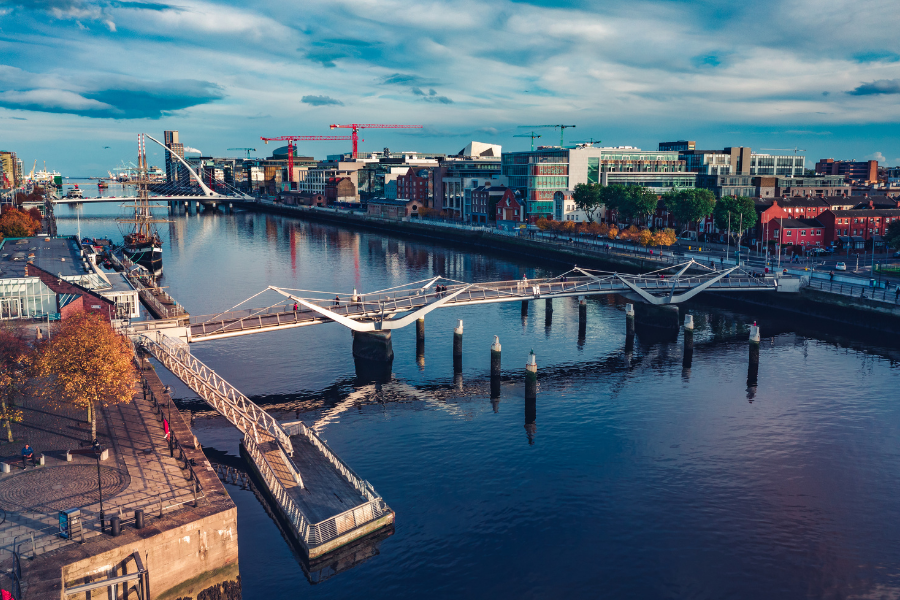
2. No work permit for the EU
Ireland is a member of the European Union allowing easy access to other member states. Citizens of EEA, Switzerland, and the UK can live and work in Ireland freely without a work permit. If you are not in that category, don’t worry. Ireland always welcomes skilled workers, especially employees working in the IT and financial realms. However, you must apply for a visa and an employment permit to live and work in Ireland.
3. Working in the fast-growing economy in the EU
Ireland has a thriving economy and is the fastest growing in the European Union for the past few consecutive years. Although 2020 was very challenging for the global economy and the domestic economy struggle, the nation’s GDP of Ireland grew by 3.4%.
According to the EY Economic Eye, the economy is predicted to grow by 5% in 2021 and 4.6% in 2022. Moreover, the labour market is expected to recover its peak by late 2023. Ireland is still an ideal country to offer attractive salaries and benefits.
4. Moving to Ireland, the only English-speaking country in the EU
The official language of Ireland is Gaelic. But you don’t have to worry because most of the population still use English more often in daily life, study, and work in Ireland. This is the only country in the EU that uses English as its first language.
5. Multinational culture
Over time, Dublin became an international city attracting senior talent from around the world to work in IT and financial areas. The working environment of companies is far more diverse. The foreign communities live in harmony with local people to develop and contribute to Ireland’s economy.
In addition, Dublin is certainly an LGBT-friendly city. Everyone is welcome to come and work in Ireland. Every June, the annual Dublin Pride Parade takes over the city centre to celebrate diversity too.
6. The world-leading business culture
The Irish Financial Services Centre was established in 1987 which aimed to attract investment sources and build up a centre of internationally traded financial services such as banking, funds, and insurance.
The governments offer business-friendly policies to attract international firms and talent. This helped to develop Dublin’s Docklands to become a new home for many technology and financial companies. Today, the Docklands is home to over 500 companies operating in this area, including more than half the world’s top 50 banks and top 20 insurance companies as well as headquarters to many big technology firms.
7. Friendly people
“There are no strangers here, only friends.”, WB Yeats.
Indeed, you will feel comfortable and charmed by the friendliness of the Irish people. Most people are more than happy to help you overcome any obstacles and support you while you adapt to your new life in Ireland. Interestingly, Galway and Dublin are Europe’s friendliest cities in the Condé Nast Traveller Reader Travel Awards 2020.
What you’ll need to work in IT in Ireland?
A good level of IT expertise.
Good knowledge of working English.
Check our website for available roles or send us your CV.
Are you considering changing your job? Where should you start? What do you need to stand up in the busy talent market? Here are some tips from our recruitment consultants which will help you prepare well before switching your workplace.

Research about the market
What do you want in your next job? Do you want to look for a similar job to your current one or a higher level? Do you want to work in a different realm?
After having the answers, you should search for jobs on career platforms or social media to learn how the job market has changed. Then, compare your skills and experience with the requirements. Are you good enough to change a job? Which skills are necessary for you to make a great move in your career?
Find out your core values
- What are your strengths and weaknesses?
- What are your successes and failures?
- Which experience and knowledge have you gained from your previous and current jobs?
- How are you different as compared with yourself in the last 6 months/last year/last 2-3 years?
- How have your colleagues and supervisors evaluated you?
- How have you contributed to the organisation(s)?
This is a crucial step to understanding your core values and finding out your “unique selling point”. It helps you prepare yourself better before changing a job.
Talk to a recruiter
Contacting recruiters will save you time when changing a job.
You should be honest about yourself, your situation, experience, expectations, and even reasons to change a job. This is key information for them to help you navigate the job market and to look for jobs that match your skills. A recruiter can be your ally to give your practical advice for your CV, interviews, skill tests, and insights about the employers to help you go through the recruitment process.
Search for a recruiter for your areas or send your CV to us, our recruiters will be in contact as soon we find a job that uniquely fits you.
Develop and execute your plan
Changing a job sometimes takes time. You should be patient to find your dream job. After mapping out the directions, you should activate your plan. During your job search, you will learn what to update and modify your plan.
Hope you will find your dream job soon.
These days, working from home is not news anymore, let’s just say that most companies will offer the choice to work remotely at least a few days a month. For employees, working from home has become a valid criterion in choosing a certain role over another. People love when the employer shows flexibility because this comes with trust and respect.
The benefits of working from home are well known: we save a lot of time that we would spend in traffic, we could focus easier on the task without being interrupted by anyone, we get time for little tasks like collecting the kids from school, having lunch together, helping with homework, doing some housework and the list could go on and on. This flexibility gives you freedom and sets your mind for work – maybe this is the greatest benefit, once you put away all these things that occupy your mind during the day (little tasks you think about while at work because it has to be done) your brain activity is focused on your work – and this is the key to the increased productivity.
At the same time though, for people working from home, there are lots of challenges. As we all know, people need social interaction in order to feel appreciated. Well, imagine you are always working on your own – it is fun in the beginning, but after a while, you get lonely. You miss the chit-chats over coffee in the morning, you miss the discussions about the latest episode of the most recent series, no beers and fun after work. Your colleagues become some avatars on some messaging platform. It might sound a bit dramatic, but this is very true. In order to avoid this, it would be great to organise visits to the office once in a while, especially when there are important meetings or events in your company. Even having video meetings and calls would do it. This will give you the comfort of being part of your group of colleagues. I tell you, I work in Romania for e-Frontiers a company based in Dublin and every time I get to go to the office (twice a year), I am very happy and it fills me with positive energy and the sense of belonging gets very strong. This year I will be there for the Christmas party (yay!).

The second challenge is that working from home, you can be easily distracted from your work by factors like getting a parcel, electrician visit and so on. That’s why it is so helpful to have a kind of structure in place. It is advisable to have some rituals that help you be more efficient. Some people have a To-Do list ready every morning and then tick off the tasks through the day, others have early calls and make a plan while there are others who go with the flow and get things done. It depends a lot on what sector you work in but at the end of the day, either very rigorous or loose, it all depends on how you feel it works for you and for your team and company.
Another challenge is when it comes to meetings and calling candidates because it is so easy to forget some things especially when you are focused on another task. It would be a good idea to have some sort of reminder in place. To be very honest, to have this sort of meeting, calls, deadline in the calendar is a lifesaver. I met some people who had reminders to finish work ????and others told me that, after a number of years, there is no difference between professional and personal life (if you remember something at 21:00 o’clock or you have a brilliant idea at 22:00, you just go in your “home office and you have it done”).
My conclusion is that working from home is not for everyone. If you can adapt and if you are very organised, it might be great for you. Otherwise, I am not sure. One sure thing is that working from home will soon be a benefit in every company. And then, companies have to bring something new in order to raise the employee’s efficacity. I understand in Japan they introduced, for the first time, the 4 days working week and the productivity increased a lot. I wonder, is this the way to go forward?
January 2020

For me, coming to work in Ireland is one of the greatest decisions in my life. I not only made a big step forward in my career but also am having a really nice experience with Irish culture and lovely landscapes in Ireland.
What motivated me to come to work in Ireland?
Besides many opportunities for a French girl to work in Ireland, I also take this chance to improve my English by working and living in an international environment. So far, I am proud of understanding many different English accents of speakers from around the world.
As William Butler Yeats, a famous Irish poet introduced his country: “There are no strangers here; only friends you haven’t yet met”. “Exactement!”. I’m so eager to discover the beautiful landscapes and great culture in this Emerald Isle and be around friendly and supportive locals, especially my colleagues.
What are the differences in living and working style between France and Ireland?
As compared with recruitment vacancies in France, there are more opportunities and well-paid jobs for a recruiter to move further in their career. I prefer the requirements and challenges for recruiters working in Ireland. Besides certificates and experience, we focus more on soft skills to become an active team player and a trustful friend for my candidates to support their career development and deliver the best quality services from e-Frontiers.
In my spare time, I love to learn more about the Irish culture with lovely songs, vibrant dance and great beer. However, the downside of living in Dublin is the challenge of getting accommodation and the general expensive living costs.
How could I overcome the obstacle of living and working in Ireland?
The language and different lifestyle could be considered as tough obstacles. However, all were solved quickly as I learned to be more patient and open-minded to accept and integrate myself into a new life which is definitely a big change from my previous life in France. My efforts are paid off. I have really settled into the Irish lifestyle now (though I will always be French!) while enjoying working at e-Frontiers.


In the business battle among B2B technology companies today, Customer Success Manager is one of the major keys to hook and maintain a relationship with clients. How much do you know about this interesting position?
What exactly is Customer Success Manager?
This is a very new and recent title that has only existed the past 7-8 years and many people might not know exactly what a Customer Success Manager (CSM) does or what skills are required to do this job.
Many SAAS companies have created a separate function in their business dedicated specifically on managing the client/customer relationship and ensuring that the clients and vendors goals using their software has a beneficial outcome. This client/customer relationship is managed by the CSM.
What does Customer Success Manager do?
A CSM’s main goal is to create strong and long-lasting relationships with their clients/customers and to make them as successful as possible. The CSM will be the primary contact person for the onboarding of the client/customer, provide the training of platform end user onsite or via online video platforms, identifying opportunities and act as a client advocate and collaborate closely with other teams such as Sales and Technical support.
Which skills are expected in a Customer Success Manager?
The main skills that I believe a CSM needs is excellent communication skills and relationship building skills, empathy and a positive attitude and desire to help clients/customers reach their goals. These soft skills are key factors when trying to reach a successful outcome and a long-lasting, proactive relationship between the parties involved. Other skillsets and experience that are also very useful to have in order to succeed as a CSM, are strong analytical skills, experience, and knowledge in the SAAS or the software industry, Account Management experience, etc.
Customer Success is a title that continues to develop mainly in the SAAS and software industry, and I believe will quickly grow into other industries as well. Although the technical and analytical skills are crucial to have in this role, I do believe that your mindset, positive attitude and drive to help to find the right solution is everything when being a successful Customer Success Manager.
I am happy to listen to your career story and discuss further Customer Success opportunities. Please forward your CV to jehona.jashari@e-frontiers.ie.


Being back in New York means a lot for me, not just from a professional standpoint, but also from a personal standpoint as well. Spending a year living in Ireland is an experience that will impact me for the rest of my days. I believe everyone has a turning point or event that impacts him or her to narrow down their path in life and helps push their journey to a faster start. My decision to buy a one-way ticket to Ireland after graduating from college influenced who I am today had helped lead to my career in recruitment.
I was on the hunt for a job and ended up working in an area that interested me – HR. I had in fact applied for a different job and ended up working for the agency that I went through, which turned out to be a great opportunity for me. It was a chance I took and an unconventional way of getting into something I enjoyed doing- working with people. I enjoyed the hustle, the ups and downs, and the feeling of making a placement after a long process and knowing that there were people who valued my efforts, candidates and clients. I knew it was a career path that I wanted to drive on.
My decision to move back to New York and continue my career in recruitment came at a perfect time as I struck gold covered in orange: e-Frontiers. Before setting upon my solo euro trip I met with Brendan Carroll (CEO of e-Frontiers) about what he was envisioning for a New York based operation.
Right away I knew that I wanted to be part of this unique opportunity. In my mind, I’d be working part of an international startup with a strong and promising blueprint. The potential is strong as I’ve joined a great team and we share the same goals. It means a lot to me to work for e-Frontiers because like the company itself, I’ve got a good story to tell. Anyone can join a well-established firm and continue to coast- but it takes a special kind of person to build something from nothing and that’s what separates my colleague and I from the rest of the pack.
Like e-Frontiers, I pride myself on being personable, honest, and being able to build value for all parties involved- because after all, I did start out as a candidate on the other side of the fence. Living abroad taught me how to step outside of my comfort zone and taught me skills that would help build the foundation of a new office such as empathy, ability to build relationships, ability to adapt, eagerness to learn and develop, and developing communication skills. The challenge this far is what keeps us hungry and motivated as we continue to see the light at the end of the tunnel. It’s not easy but it’s forcing us to learn and grow bigger and faster.
I set out on this journey to continue to create opportunities, take chances, and build connections. We are at the start of our journey here in New York and will continue to build our success just as all e-Frontiers operations have succeeded in doing. Working for e-Frontiers – an Irish company in New York gives me the best of both worlds and I hope to continue to put our name on the map.
May 2019
Malachy Fallon

Here are 5 reasons for you to say that you love your job.
1. Work-life balance
Do you love what you are doing? Do you rest enough before going back to work? The contentment of working productively and having a healthy lifestyle will drive you to more success. If you feel negatively stressed about your work-life balance, tell yourself that it’s time to change and find a job you love.
2. Opportunities
Besides the promotion opportunities, you should consider your personal growth. It is important to have a self-development plan for yourself in the next five years. You may need some advice to upgrade yourself by learning new knowledge and improving your soft skills. The more opportunities that come to you, the more you love your job.
3. Challenge
Why should you love your job which could bring you challenges? Challenging work is considered as a motivation for you to strive and not rest on your laurels. Don’t be afraid of challenges and failure. Be innovative. If it doesn’t work out, experience it and try it again. Remember that failure is the seed of growth and success.
4. Reward
Does your company or your supervisor recognise your efforts? Rewards and encouragement could be tangible or invisible but they are necessary to drive employees to show their best at work. If this is the reason why you don’t love your job, talk to your boss before you make a job change decision.
5. Great place to work
The last reason to make you love your job is your workplace because it is where you will spend 8-9 hours every day. You can recognise whether it is a great place to work by asking some basic questions. Do you feel safe and comfortable with your working environment? Do you get a proper salary and compensation? Does your company appreciate your performance and create chances for your personal growth? Are you working in a supportive team?
If it’s time for you to look for a new job, the e-Frontiers team will be delighted to help you find a job you love and support you throughout the application process.

In 2006, my husband received a job offer in Ireland. Although we knew a relocation decision was never easy, we still decided to go for it and got this amazing experience of living in Ireland. Don’t miss out on these opportunities because of lack of information, e-Frontiers and I are here to help along the way.
The Fear of the Unknown
Moving to Ireland is a new unknown experience that brings you out of your comfort zone. You do all the research just to make sure you’re making the best decision and yet only by living in Ireland you actually get all the answers. That’s why I prefer to work with recruiters who will support us to relocate and adapt to the new life that you can overcome the fear.

Accommodation
One of the biggest problems of living in Ireland is expensive accommodation. Renting an apartment or a house can be from 1,200 euro upwards (www.daft.ie is a very reliable housing website). We came across trustworthy landlords and we were very happy with the houses we stayed in. Agreements are transparent and adhered to by both the landlord and the person renting.
Cost of Living in Ireland
The cost of living in Ireland is seen as quite high compared to other European countries but compares reasonably with that of Romania. Everything from clothes, shoes, perfumes and 80% of food prices are lower in Ireland.
One of the challenges, when living in Ireland, was that we had a habit of converting prices from euro to our own currency, at first everything seemed outrageously expensive but we soon realised after the conversions were done that we could actually purchase more and our money was going further.

Children’s medical care
When moving to Ireland with our 2-year-old son, education and access to the medical system were a priority at that time. The Irish medical system works differently. You should register with a local GP (General Practitioner) who will be your first point of call with regard to health care. GP visits can vary and are usually around €60 euro per visit. Children under 6 years old have free access to the medical system.
Children’s Education
We chose to send our child to an “Educate Together” school. Everything was so natural about the school and we were made to feel very welcome. Our child was very happy there and learnt so much, his English is so good and he acquired a very cool accent!
Irish people
What we loved most about living in Ireland was the people. Irish are friendly and willing to help everybody with smiles. We lived in the suburbs and soon got to know lots of people and Irish habits. It was common to greet people as you pass by on the street, with a simple “Hello” or “Lovely Day” and usually a reference to the weather was made!
We also learnt about the “craic”, the pub culture and about socialising. A pub is a place where you go with your family to have a nice meal, where you bring your Mum on Mother’s Day and also a lively place where you meet your friends in the evening. I like to call it a home away from home.
The Weather
Weather is always included in conversation in Ireland. This country does not have the greatest weather in Europe but the air is so fresh and clear! Highest temperatures during summer will reach 24 degrees and it often rains a lot. However, winter never gets too cold because of Ireland’s position along the gulf stream with lowest temperatures of 3 degrees at its coldest. Resulting in the beautiful green grass and plants grow in Ireland all year around.
Travel within Europe
With one of the largest aviation industries and it’s quite close to other European countries which is easy to travel within Europe. I remember how crazy the idea of travelling to the Canary Islands in January sounded to me back then and how natural it then became. Living in Ireland made me understand that you can have many breaks during the year making it easy to spend a weekend or taking longer holidays around European countries. Having this on our doorstep allowed us to travel more and made me realise that the more you travel the more you discover yourself and learn new things.
There are direct flights from Romania to the Dublin airport 4 times a week and prices are reasonable if you book in advance.
We made a “grand” decision of moving and living in Ireland. We knew that we could adapt anywhere and we were not afraid of any new adventures. We hope to pass this confidence to other people who are not sure they could make it.
 April 2019
